ATLAS for rail
From the first drawing to the finished railway. Every asset connected.
Railway projects generate enormous amounts of engineering, commercial and construction information. Too often, it lives in separate drawings, spreadsheets, programmes and systems.
ATLAS brings it together.
Built around one connected map of the railway, ATLAS takes every asset from engineering design through estimating, planning and construction to inspection and handover. Each stage builds on the same record. Information moves forward with the project, rather than being entered again and reconciled later.
One railway. One connected delivery process. One record for every asset.
One project. One connected foundation.
Every successful delivery starts with knowing exactly what is being built, where it is being built and who is responsible.
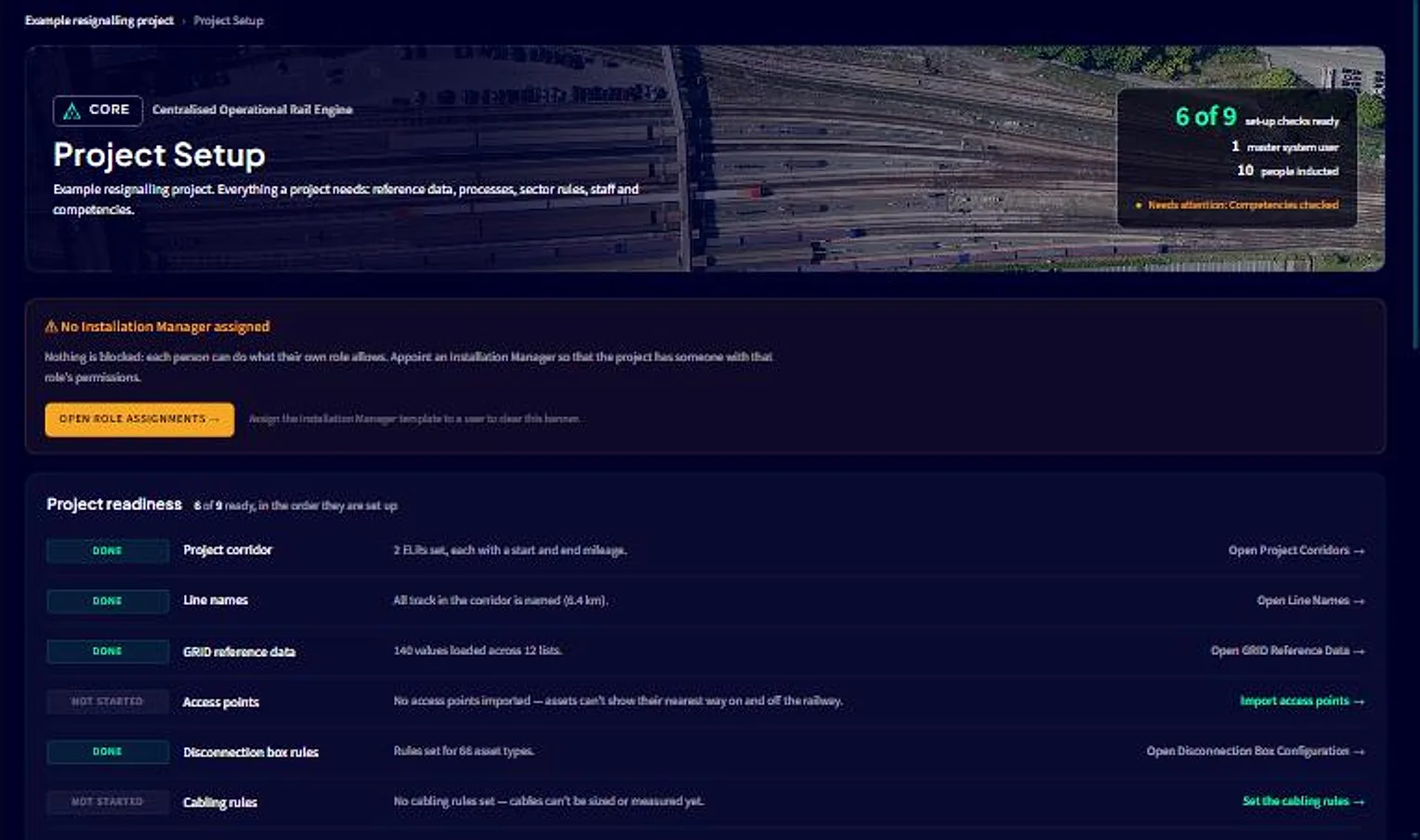
CORE establishes the project once. Its railway corridor, assets, engineering rules, people, roles and competencies become the foundation for everything that follows.
- Define the railway. Establish the project corridor using Engineering Line References (ELRs), start and end mileage, and individual lines.
- Establish the rules. Load asset types, engineering rules and reference information for use throughout the project.
- Connect the people. Induct the workforce, assign responsibilities and check competencies against their certificates.
- Know when you’re ready. A live readiness list shows what has been completed and what each module needs before work can progress.
The information entered here isn’t just project administration. It becomes the foundation of the design, the estimate, the construction plan and the site record.
One project foundation. Reused throughout delivery.
Every asset mapped. Every design traceable.
From engineering drawings to a designed railway.
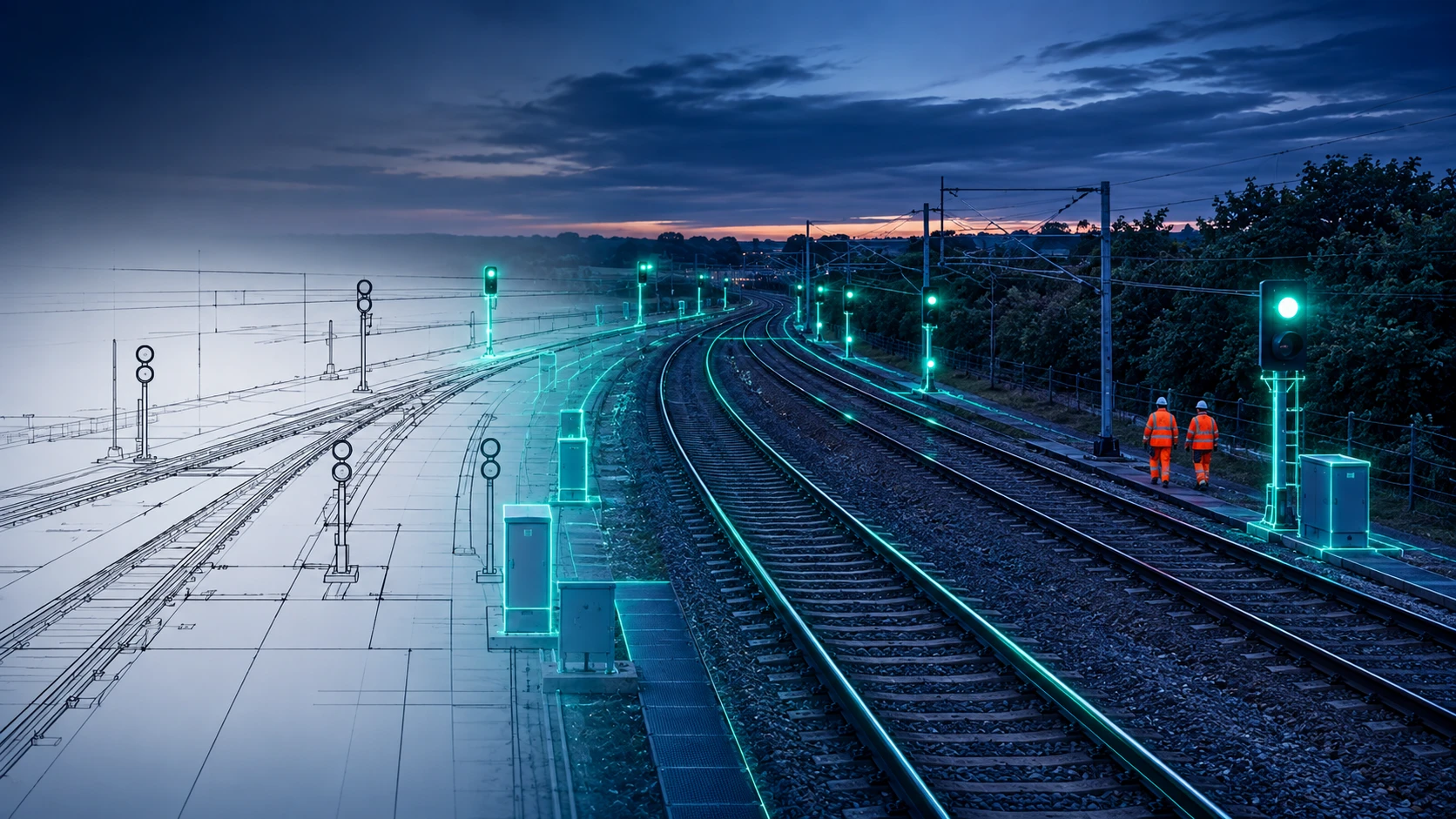
A railway design starts on a drawing. In ATLAS, it doesn’t have to stay there.
Upload the location plans and turn their engineering information into an asset register, positioned against the real railway. From there, the design is developed around the actual location of each asset.
The result is a connected engineering record: what is being installed, where it belongs, what connects to it and what materials are required.
Symbol Extraction Engine (SEE) · Automated drawing take-off
Read the drawing. Build the asset register.
SEE analyses the text and linework of PDF location plans to identify railway signalling assets, including signals, track circuits, TPWS, AWS and points.
It recognises drawing symbols, uses colour to distinguish new work from recovery and matches confirmed symbols across the rest of the plan. Engineers validate the results before anything enters the asset register.
- Identifies and tags recognised symbols.
- Proposes the asset list from the drawing.
- Highlights uncertain matches for engineer confirmation.
- Reuses trusted symbol definitions across projects.
- Reviews the results on the original plan.
- Boxes symbols that have been missed.
- Confirms the proposed assets.
- Commits the verified list to the register.
The principleAutomation does the searching. Engineering judgement controls what becomes an asset.
On the map
Every asset on the railway
Not just on a drawing. Placed on the network.
ATLAS is built around the railway itself.
Each asset is positioned against the national track centreline using its ELR, mileage and line reference, then displayed using its engineering symbol on aerial imagery.
Search by ELR, miles and yards to locate a position, or select the map to read the railway reference back.
The result is more than a list of equipment. It is a geographical record of the railway being designed.
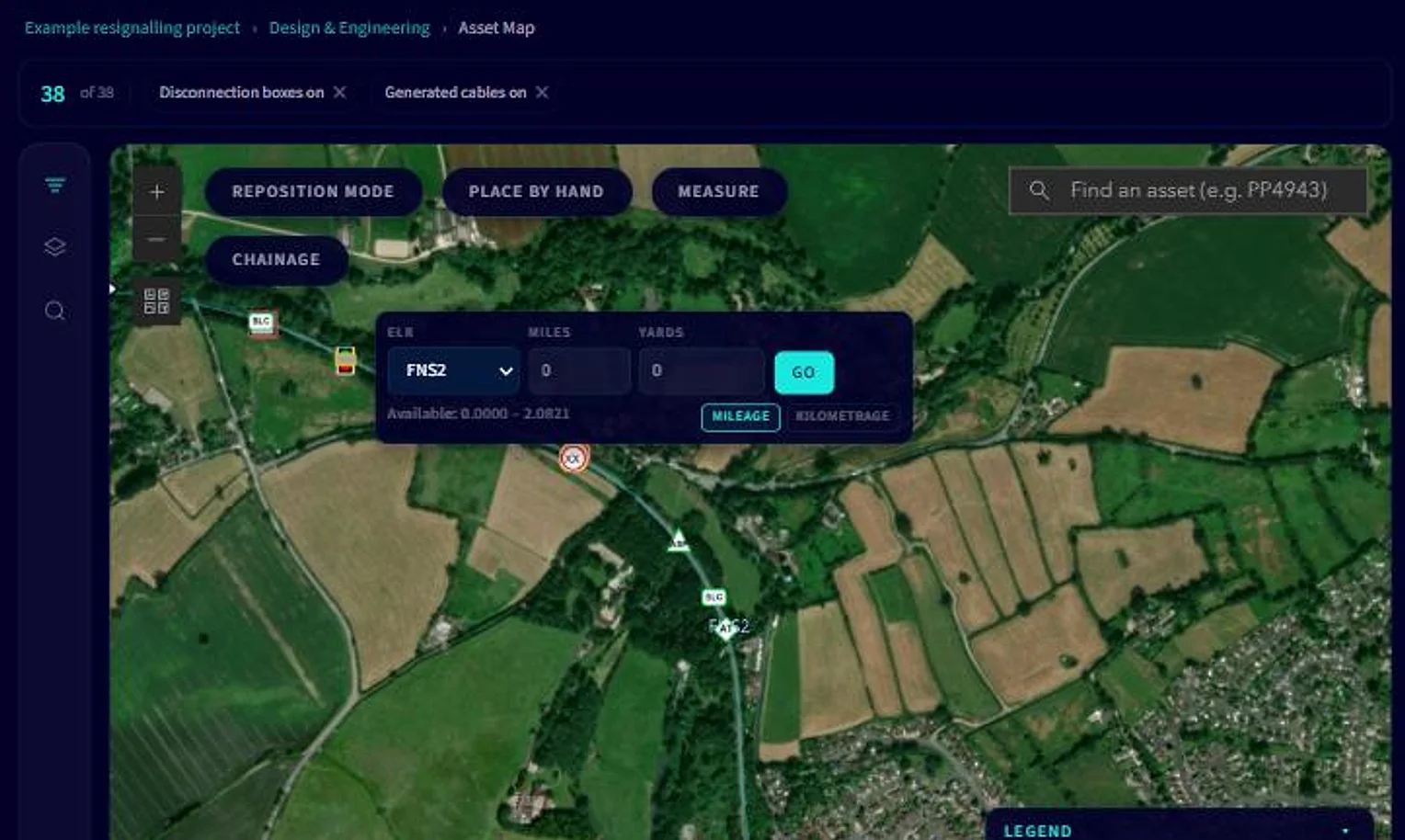
Every asset located against the railway. Not simply a point on a drawing.
One asset. Three stages of design.
From recognition to engineering design.
The same asset moves through the design process without being recreated in another system.
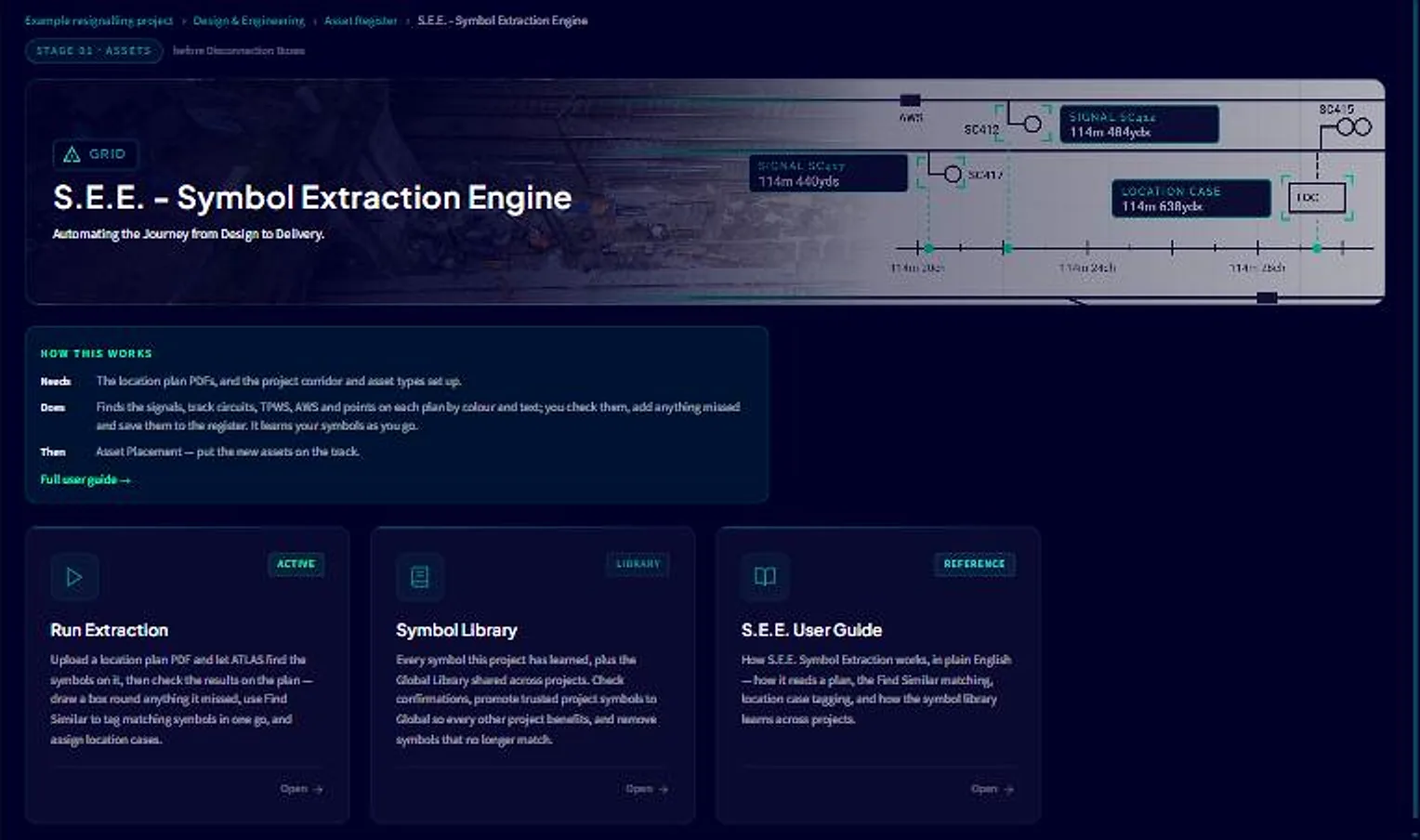
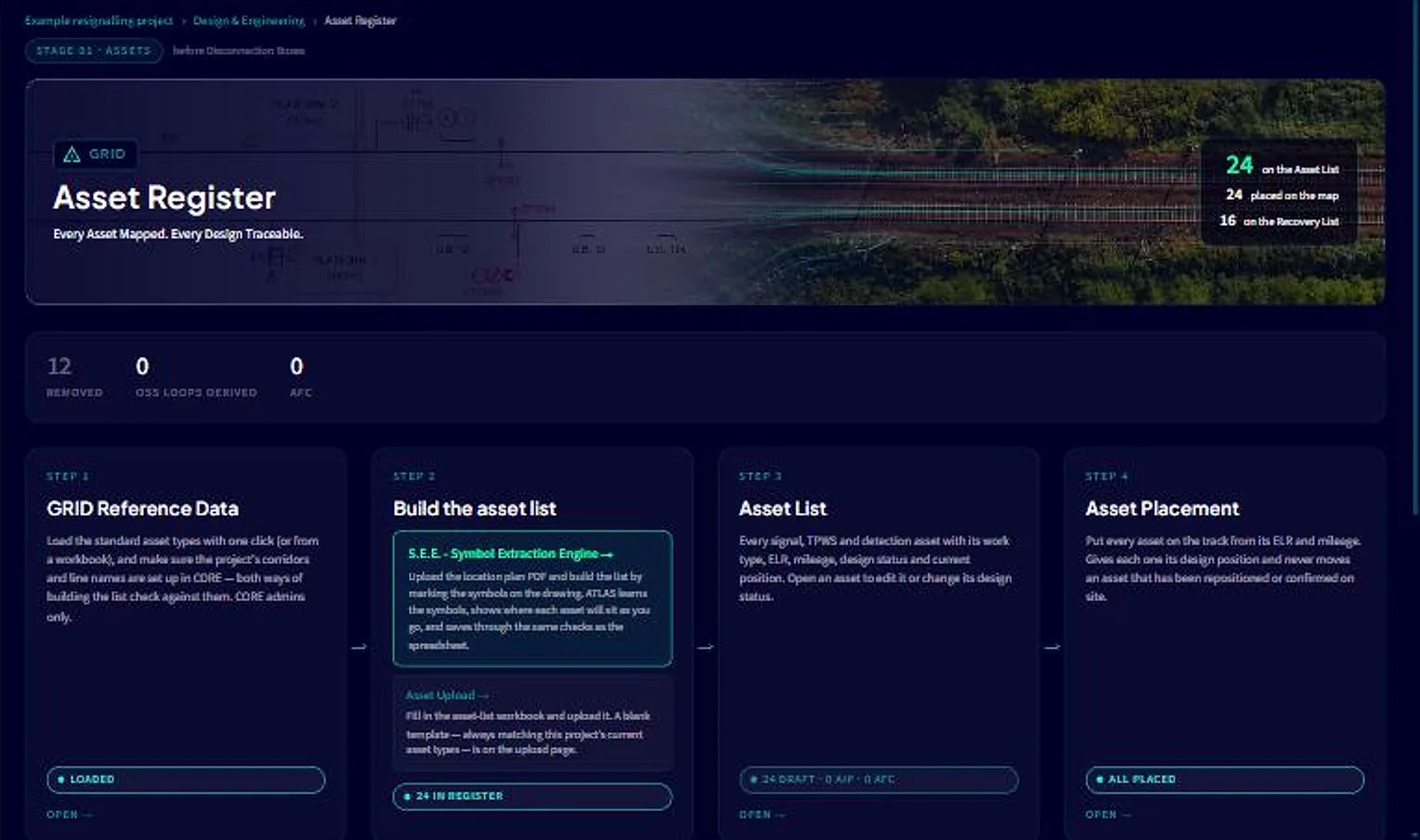
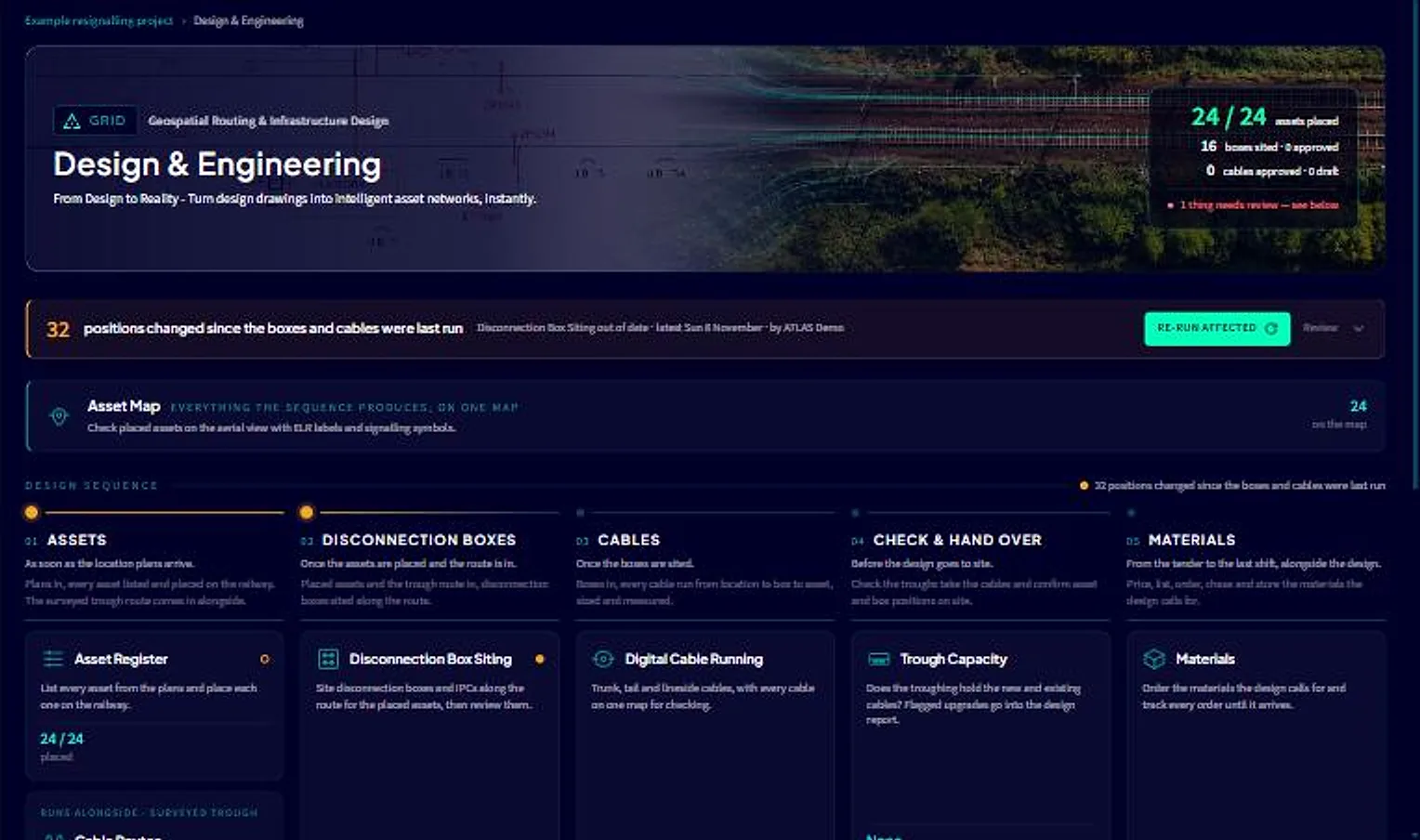
Demonstration data. Swipe or use the arrows.
A position confirmed on site is protected from subsequent automatic movement.
One asset record, developed through every design stage.
Connected cable design
Every cable traced. Every length accounted for.
Cable design begins with the actual route, not an assumed straight-line measurement.
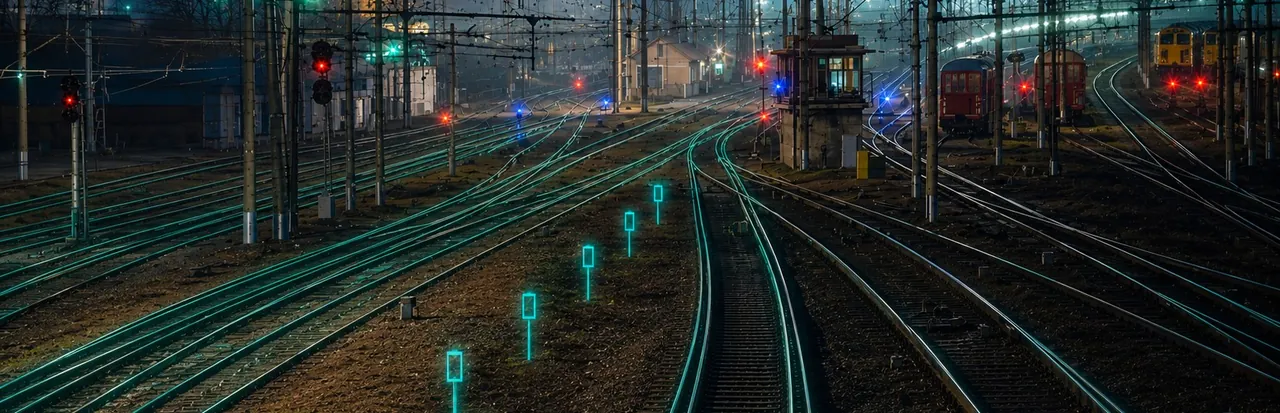
Import the troughing survey or draw the route in ATLAS. The platform then uses the project engineering rules to site disconnection boxes and trace cable connections between the location case, disconnection boxes and individual assets.
Each cable is assigned its type and calculated length, including the configured allowances for wastage, terminations, crossings and height. Troughing capacity is checked against project fill limits, and cable quantities are organised into drum plans.
- Proposes disconnection box positions using the configured rules.
- Traces cable routes along the designed route.
- Calculates cable types and lengths.
- Checks troughing capacity.
- Produces the cable drum plan.
- Flags cable length limits and designs affected by changes to positions or routes.
- Sets the engineering rules.
- Confirms the troughing route.
- Reviews box positions and cable calculations.
- Approves cables for issue.
Approved cables are retained when the design is recalculated.
Cable quantities, routes and materials derived from the engineering design.
Model the work. Know the time.
Know what it takes to build the design.
A design tells you what needs to be installed. A construction strategy tells you what it will take to deliver it.
RISE connects the two.
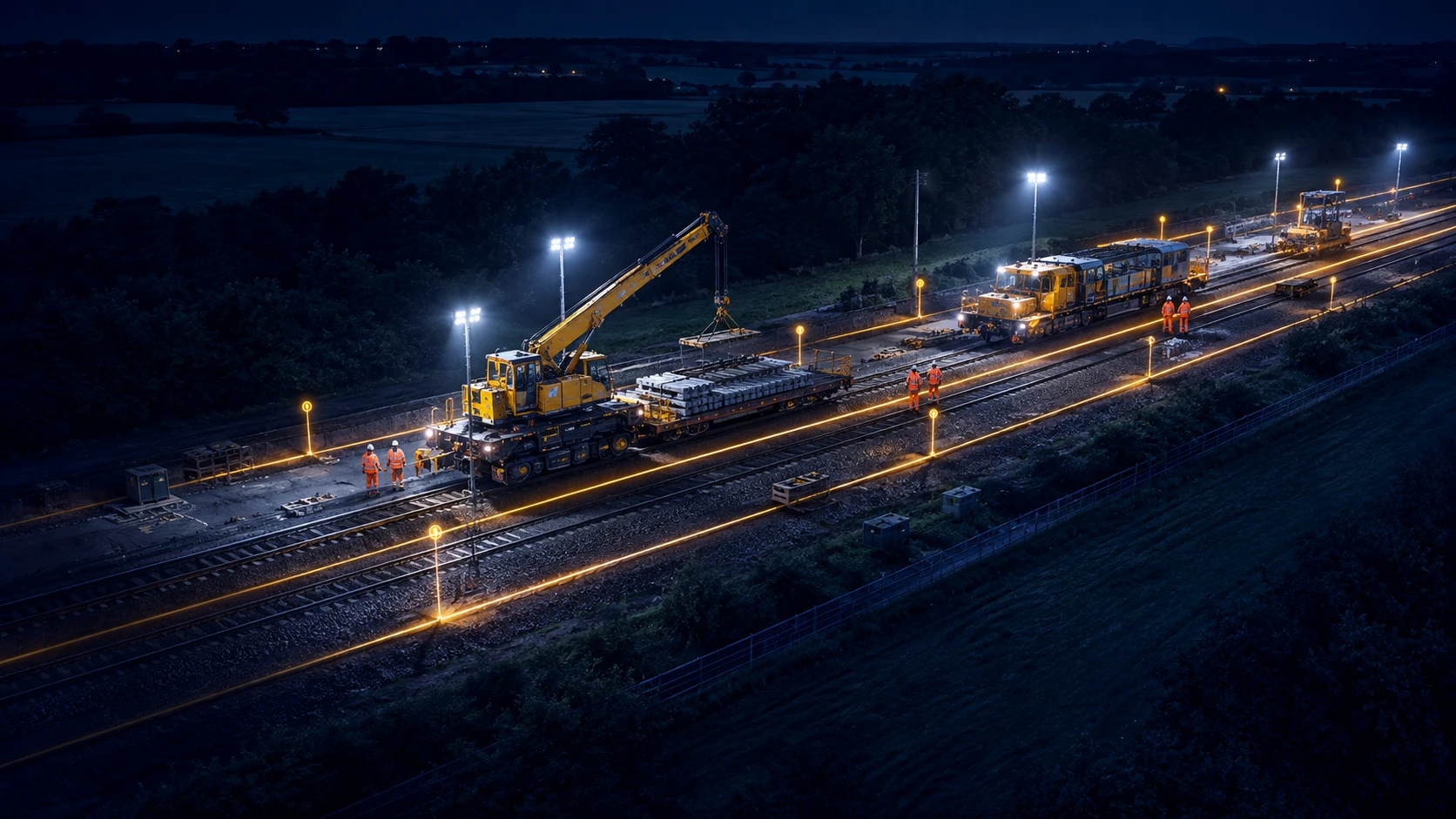
Instead of starting an estimate with a blank spreadsheet, ATLAS uses the designed assets as the basis for the work. Installation methods, gangs, plant, access constraints and standard times turn engineering quantities into a costed and sequenced construction strategy.
TEMPO estimating
Design becomes price. Price becomes plan.
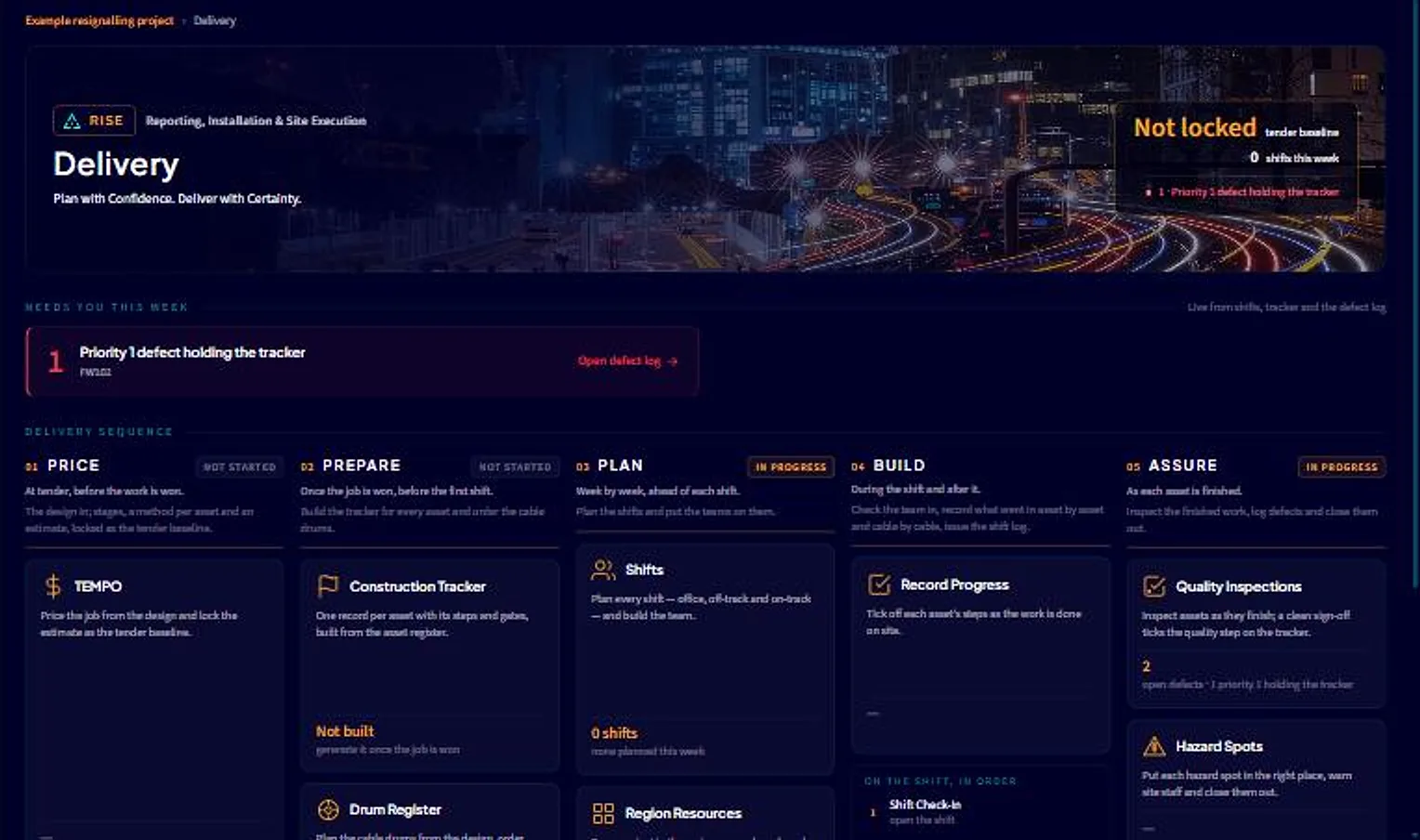
- 01Estimate from the designEach asset is assigned an installation method and the required stages of work. TEMPO models the tasks, expected hours, gang composition, plant, possession requirements and shifts needed to complete the work.
- 02Establish the baselineRun the estimate, review the results and lock the agreed tender baseline. Subsequent estimates can be retained alongside it, giving the project a controlled reference for change and progress reporting.
- 03Generate the construction trackerOnce the project is awarded, the same asset register generates the construction tracker. Each asset receives its own delivery steps and quality gates, from civils handover through to ready for test.
- 04Plan the shiftsBuild the work into a week-by-week programme, using the estimated activities, people-hours and possession constraints.
- Generates the estimate from the designed assets.
- Calculates expected labour, plant and task durations.
- Creates the asset-level construction tracker.
- Produces a shift-based programme.
- Identifies design changes that affect the delivery plan.
- Defines installation methods and project constraints.
- Reviews and runs the estimate.
- Agrees and locks the commercial baseline.
- Plans and manages the construction shifts.
When the design changes, the estimate can be run again against the revised design. The original locked baseline remains available for comparison.
From engineering design to a costed, asset-level construction strategy.
Positioning people. Protecting delivery.
The right people. The right access. The right conditions.
A construction programme is only deliverable when the railway access, workforce and safety arrangements are in place.
GUARD brings these requirements together against the same shifts as the construction plan.
From possession planning and weekly notices to staff competence, fatigue, worksite control and the record of what happened on the night, GUARD connects the arrangements with the work they support.
Access against the plan
Establish possession patterns and manage access requirements as the project develops. Weekly operating notices and possession information are read against the planned shifts, allowing differences in times, arrangements and worksite details to be reviewed.
The right person in every role
Plan the workforce against the work sites and their requirements.
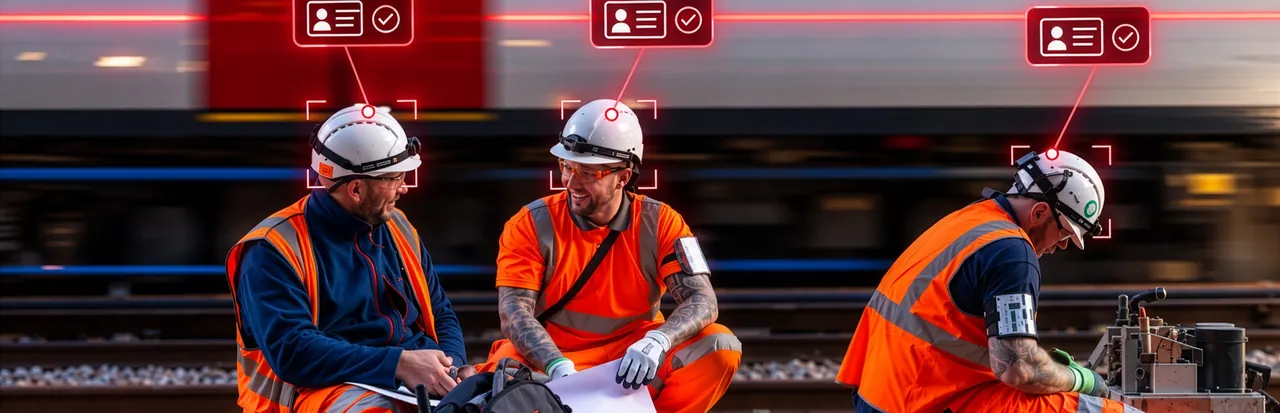
GUARD identifies unfilled safety-critical roles, checks competencies against shift dates and evaluates availability and fatigue using the configured project rules and HSE Fatigue and Risk Index.
Warnings highlight potential conflicts before the shift. Configured hard limits prevent bookings where the rules require it.
Control at the point of work
Give the people responsible for the work a connected view of site activity.
Digital sign-in, induction and rest checks, briefing information, parties under protection and the electronic Work Site Certificate are brought together in the supervisor’s working environment.
What happened, recorded against the shift
Keep possession details, incidents and supervisor reports connected to the worksite and shift they relate to.
The result is a traceable record of access, workforce and worksite activity, rather than information scattered across separate records.
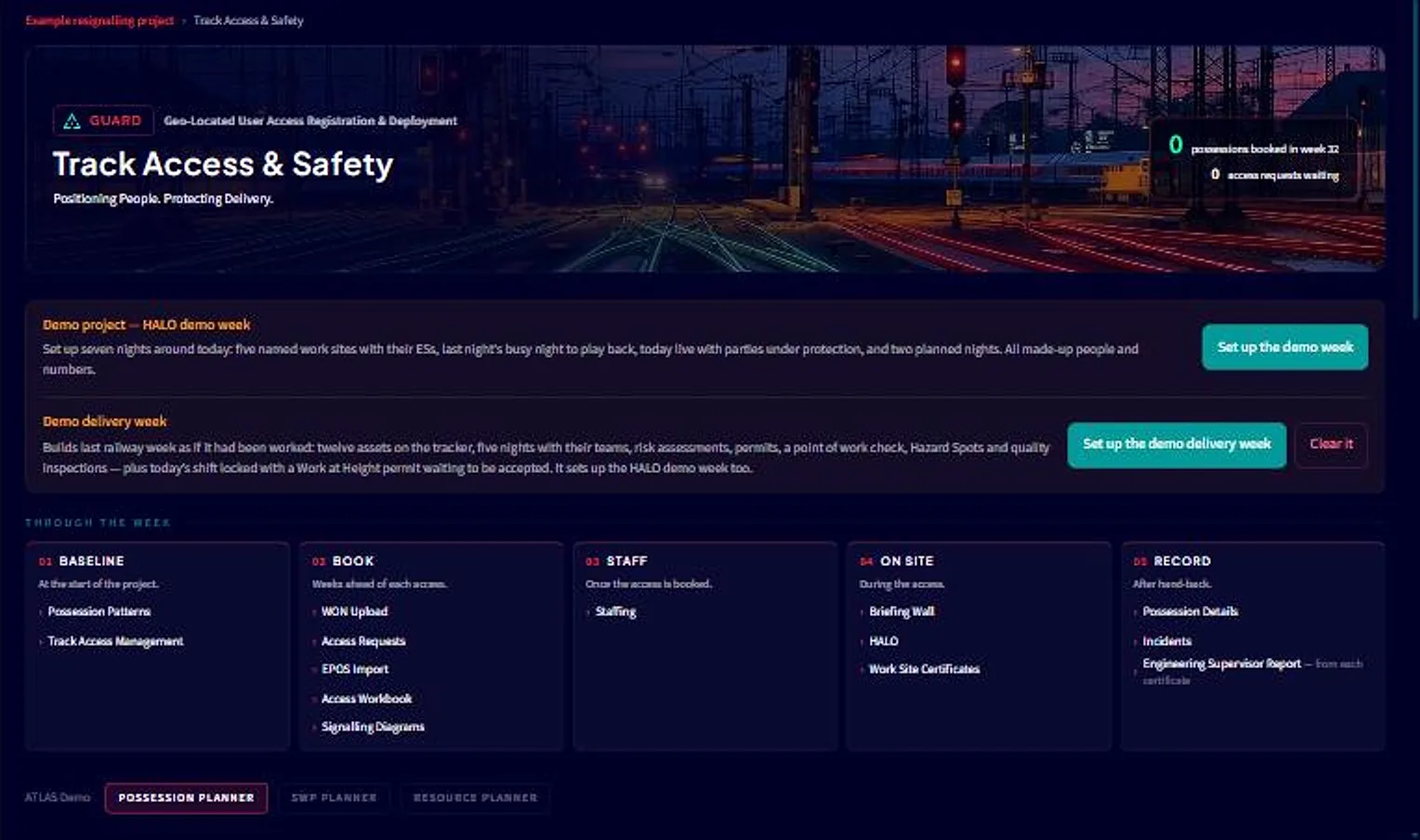
Animated illustrations with example data.
From possession planning to the worksite record. One connected process.
Important: ATLAS applies the project roles, rules and checks configured by the organisation. Safety decisions and the definition of safety requirements remain with the appropriately authorised people.
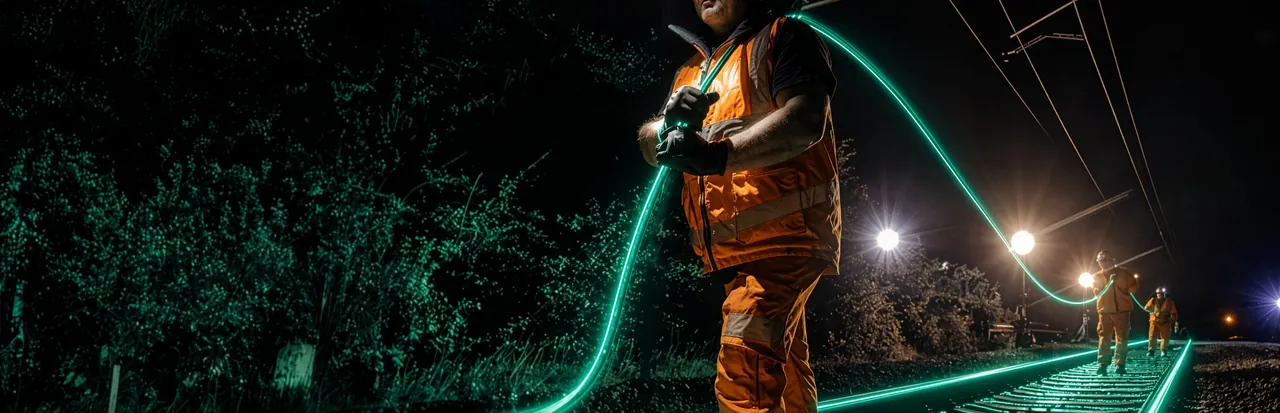
Built for construction. Designed for delivery.
From planned work to inspected assets.
This is where the design becomes reality.
The construction team works from the same asset register and tracker created during the engineering and planning stages. Every activity, installation and inspection adds to the record of what has actually been delivered.
Digital paperwork that knows the work
The right information for the work being done.
Generic paperwork doesn’t always reflect the work taking place on site.
ATLAS uses the planned activities, work conditions and asset types to suggest the records required for each shift.
Risk assessment hazards are suggested from the activity and working conditions. Relevant permits and documents are identified, and inspection forms are prepared as assets reach their quality gates.
- Suggests hazards based on the planned work and conditions.
- Identifies relevant permits and supporting documents.
- Prepares asset-specific inspection forms.
- Connects completed inspections to the construction tracker.
- Reviews and confirms the suggestions.
- Completes the point-of-work checks.
- Records installation and inspection results.
- Signs the records and manages defects.
A completed inspection updates the relevant quality step on the asset tracker.
Paperwork generated from the work, the people and the assets.
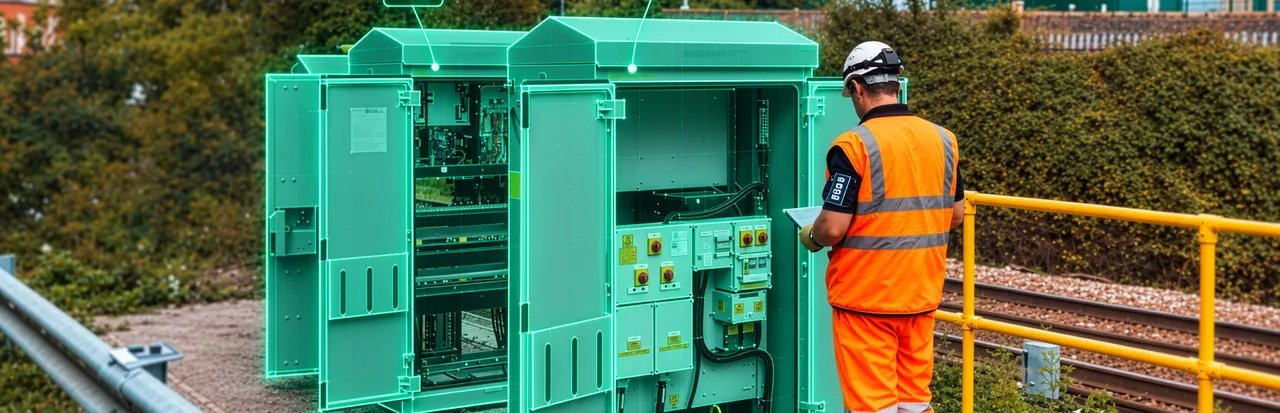
Built for the realities of the railway
The field pages keep working.
Railway work doesn’t always happen where there is a reliable mobile signal.
ATLAS supports offline operation for its designated trackside field pages, including the supervisor’s night page, sign-in wall, point-of-work checks and tagging.
Records are stored on the device and synchronised when connectivity returns. If a record is rejected, the person is shown the issue rather than having a failed submission silently retried.
The wider ATLAS platform requires a connection.
Record the work at the trackside. Synchronise when connected.
PROVE · Recovery and testing · In development
Bringing installation through to commissioning.
PROVE is being developed to extend the connected asset record into recovery, testing and commissioning.
The planned capability includes:
- Recording redundant equipment for recovery.
- Tagging and photographing equipment ahead of the work.
- Locating and scanning items during recovery.
- Planning test shifts alongside construction.
- Checking tester competencies and licences.
- Recording certificate steps against the relevant interlocking area.
- Connecting commissioning close-out and test evidence to the asset.
The objective is to carry the same connected record beyond installation and inspection, towards a fully evidenced handover.
The next stage of the asset lifecycle. PROVE is in development.
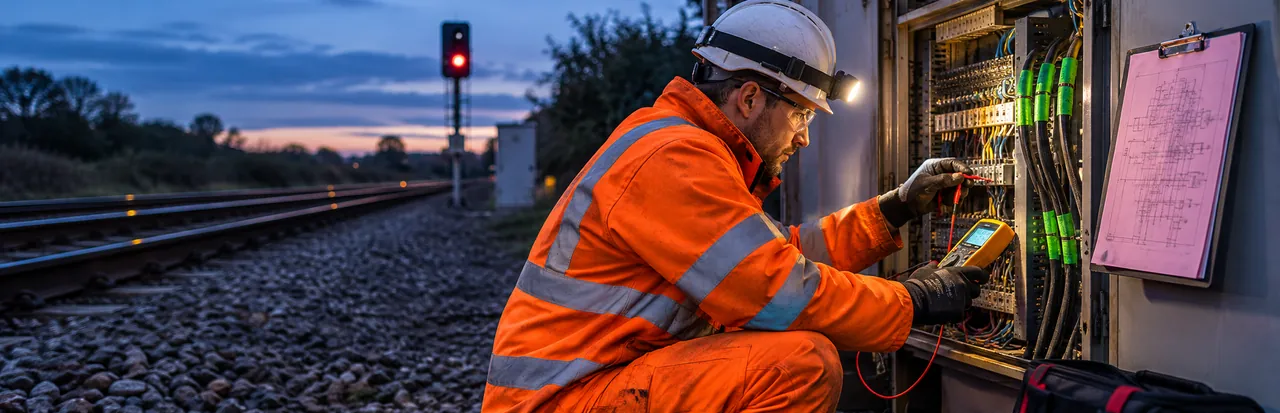

Every asset. Every result. Accounted for.
The value of a connected project record becomes clear when you need to understand what has actually been delivered.
VISION brings the project together through its own delivery records, turning asset-level activity into a view of project performance.
Track progress against the locked baseline, review access and track time, understand labour and fatigue, and examine the materials and delivery information behind the figures.
Reports are organised by railway reporting period, with supporting records available behind the numbers and a print-ready period pack for reporting.
The live asset record
One asset. Its entire delivery history.
The asset first recognised on the engineering drawing is the same asset that appears in the design, estimate, construction tracker and inspection records.
Its location, engineering information, planned work, installation progress and quality results remain connected.
There is no need to rebuild the asset history at the end of the project. The information has been accumulating as the work progresses.
The asset record becomes the evidence of delivery.
From site activity to project insight
See the progress. Understand the detail.
VISION brings together:
- Progress. Delivery against the locked construction baseline.
- Access. Possessions and worksite access granted, used and lost.
- Time. Hours, shifts and track time.
- People. Workforce and fatigue information, subject to permissions.
- Materials. Delivery information and quantities.
- Reporting. Railway-period summaries with supporting records and exportable reporting.
Each figure is connected to the underlying project information, allowing the user to move from a project-level result towards the assets, shifts and records behind it.
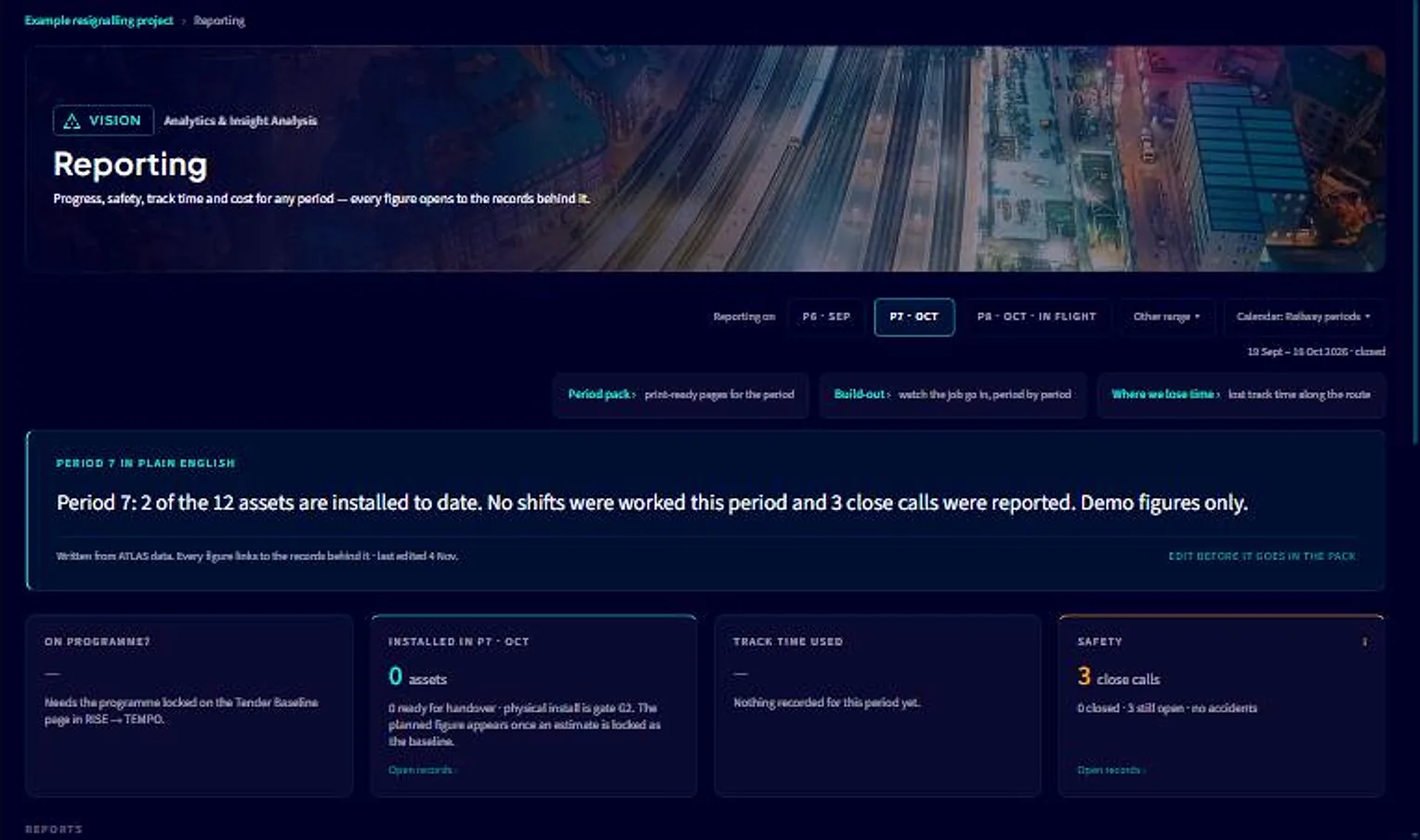
Project performance, backed by the records that created it.
What changes when everything is connected?
| Delivery stage | Without a connected record | With ATLAS |
|---|---|---|
| Establish | Project information entered into separate systems. | One project foundation reused throughout delivery. |
| Design | Manual drawing take-off, repeated asset entry and disconnected cable calculations. | Assets identified, checked, positioned and designed around. |
| Price and plan | Estimates built separately from engineering information. | The actual design becomes the basis of the estimate and construction tracker. |
| Prepare | Access, workforce readiness and worksite control managed separately. | Planned and checked against the same construction shifts. |
| Deliver and inspect | Site paperwork and quality records disconnected from the asset. | Installation and inspection recorded against the asset being delivered. |
| Prove and report | Delivery evidence assembled from multiple records at the end. | The project record builds throughout delivery, ready to support reporting and handover. |
One asset. Every stage. One connected record.
Designed. Priced. Planned. Prepared. Built. Inspected. Accounted for.
ATLAS connects the engineering, commercial and construction information behind railway delivery.
From the first location plan to the last asset inspected, every stage builds on the same connected record.
No disconnected asset lists. No starting the next stage from scratch. No waiting until the end to understand what has been delivered.
One platform. Every mile. Every asset. Every stage.